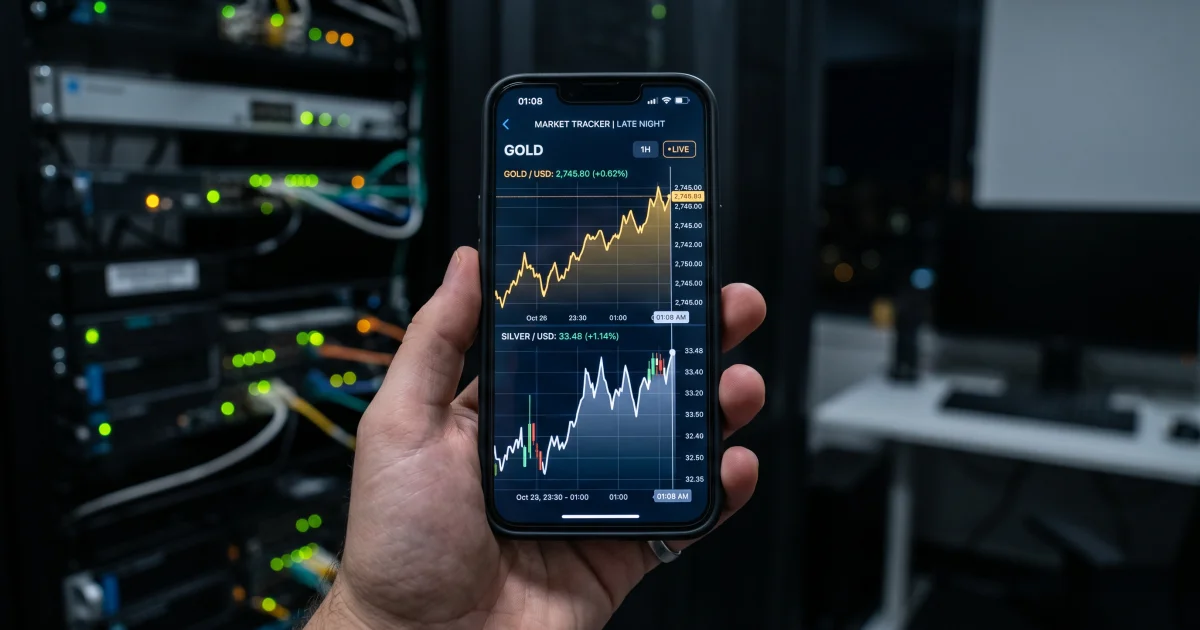

If you are running a fintech app, an e-commerce jewelry storefront, or a commodities trading dashboard, your platform lives and dies by data accuracy. A stale spot price isn't just a minor UI bug; it directly translates to lost margins and compromised trades. Integrating a reliable, real-time API for market data ensures your business logic executes flawlessly and stays perfectly aligned with global commodity shifts.
Here is a breakdown of why specialized data feeds for gold, silver, and platinum are essential for modern financial platforms, and how to leverage them effectively.
Why You Need a Dedicated Gold Price API
Gold remains the ultimate safe-haven asset, but its price moves rapidly in response to geopolitical tensions, inflation data, and Federal Reserve yield shifts. If you are building a portfolio tracker, an ETF valuation service, or an inventory management system for bullion, you need quotes that reflect the live market.
A robust Gold Price API delivers continuous, low-latency spot prices. However, a premium integration goes beyond the standard troy ounce. Look for endpoints that return localized data, including specific karat pricing (24k, 18k, 14k, and 9k). Coupled with native multi-currency conversions, this allows developers to instantly serve a global user base without the overhead of querying a secondary forex API to calculate exchange rates on the fly.
Navigating Volatility with a Silver Price API
Silver operates with a unique dual identity: it acts as a precious financial hedge while also serving as a critical industrial component in solar panels, electronics, and automotive manufacturing. Because it is tied to both investment sentiment and industrial supply chains, silver is historically much more volatile than gold.
When industrial demand shifts, silver prices can swing aggressively. To manage this volatility, platforms require a highly responsive Silver Price API. Whether you are dynamically pricing silver rounds for retail customers or calculating automated asset allocations for an investment fund, tapping directly into live market ticks ensures your numbers are always accurate. Advanced APIs will also expose specific fineness grades (999, 958, 925, 900, 800) to simplify pricing logic for custom jewelry or specialized manufacturing.
Tracking Industrial Demand via a Platinum Price API
Unlike gold, platinum’s market value is heavily anchored to the automotive industry—specifically the production of catalytic converters—and emerging green energy technologies. The platinum market is smaller, less liquid, and highly sensitive to mining outputs from concentrated regions like South Africa.
For platforms dealing in automotive supply chain logistics, industrial manufacturing, or high-end jewelry, relying on delayed data introduces massive risk. Integrating a dedicated Platinum Price API provides the real-time visibility necessary to track this specialized market. Clean REST JSON endpoints allow engineering teams to pull platinum spot prices directly into forecasting models and live dashboards with zero parsing headaches.
The Metal Sentinel Advantage
When evaluating a precious metals data provider, stability, speed, and data authority are non-negotiable. Here is why developers choose Metal Sentinel to power their applications:
Institutional-Grade Sourcing: We source our live quotes directly from Kitco, updating on every trading tick during market hours so your platform reflects reality.
Granular Metal Formats: Move beyond standard ounces. Our API returns precise karat and fineness measurements out of the box.
Native Global Currencies: Request spot quotes in over 180 major fiat currencies and cryptocurrencies directly within your single API call.
Deep Historical Context: Real-time prices handle today's transactions, but our historical endpoints expose the intraday, daily, and multi-year snapshots necessary to power interactive charts and backtest complex trading algorithms.
Building reliable financial infrastructure doesn't have to be complicated. By routing your market data through a fast, reliable REST API, your engineering team can stop worrying about data scraping and focus entirely on building a better product.