
Live data
Lead Price API
Real-time lead spot prices in 180+ currencies.
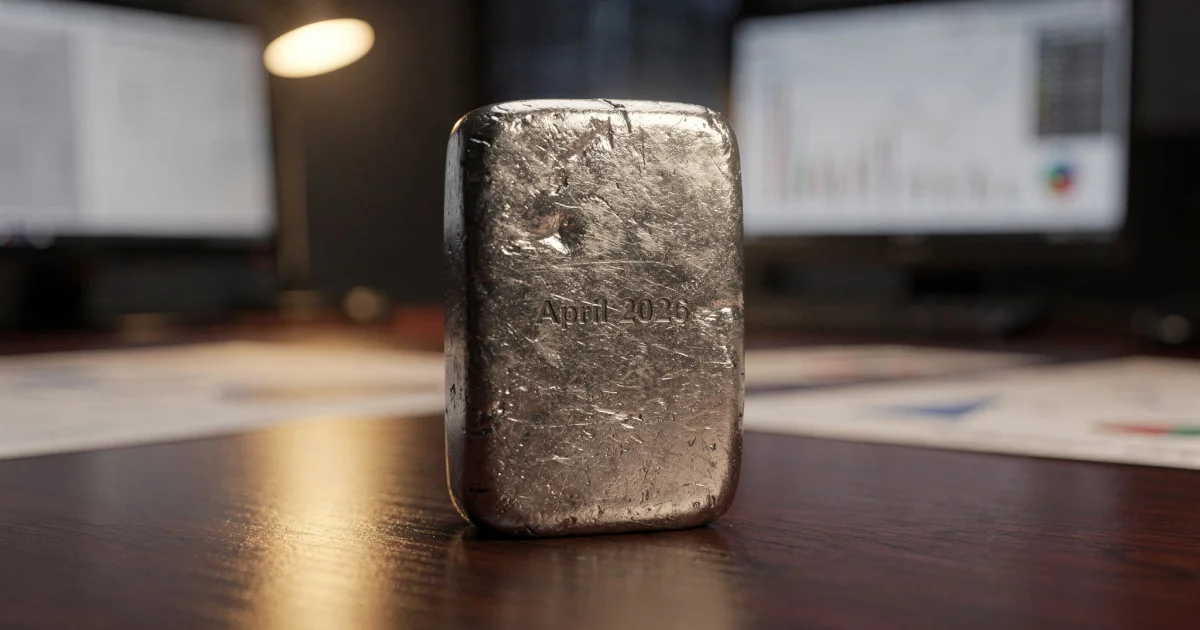
As we move through the second quarter of 2026, the global lead market is proving that "old school" isn't synonymous with "obsolete." While the lithium-ion revolution often steals the headlines, lead remains the quiet workhorse of the energy storage and automotive sectors.
At Metal Sentinel, we’ve been tracking the shifting tides of the London Metal Exchange (LME) to provide a clear picture of where this heavy metal is headed. Here is your comprehensive guide to the lead market situation in April 2026.
The April 2026 Snapshot: LME Prices and Market Sentiment
As of early April 2026, the lead market is characterized by a "wait-and-see" stability. After a volatile March that saw prices dip to a 49-week low of $1,884/mt, the metal has staged a modest recovery.
Current trading data shows LME lead hovering around $1,931.40/mt. This slight upward nudge is largely attributed to geopolitical tensions and a tightening of LME warehouse stocks, which currently sit at approximately 278,775 tons.
Key Market Indicators (April 10, 2026)
Metric | Value (USD) | 3-Month Trend |
|---|---|---|
LME Cash Settlement | $1,893.50 | ↘️ Slightly Bearish |
LME 3-Month Contract | $1,927.00 | ↗️ Neutral-Positive |
Market Cap (Global) | ~$31.2 Billion | 📈 Growing |
For traders looking for real-time updates on industrial commodities, keeping an eye on the Metal Sentinel market reports is the best way to stay ahead of these daily fluctuations.
Supply and Demand: What’s Moving the Needle?
The "Lead-Acid vs. Lithium" debate has finally settled into a symbiotic reality. Lead isn't being replaced; its role is simply evolving.
1. The Automotive "Anchor"
Despite the surge in Electric Vehicles (EVs), nearly every vehicle on the road—including hybrids and full EVs—still relies on a 12V lead-acid auxiliary battery for critical safety systems and onboard electronics. In the US, the average vehicle age has reached a record 12.9 years, fueling a massive replacement market that provides a permanent floor for lead demand.
2. The Rise of "Green" Lead
Sustainability is the primary driver of supply in 2026. The EU Battery Regulation (2023/1542) has now shifted into high gear, mandating a 90% recovery rate for lead content. This has accelerated the transition toward secondary (recycled) lead. Companies like Clarios and Exide are now operating near-total "closed-loop" systems, recovering up to 99% of lead from spent units.
Future Predictions: Where Do We Go From Here?
Looking beyond the current month, the forecast for lead is one of "disciplined growth." While we don't expect the explosive price spikes seen in copper or tin, the stability of lead makes it a favorite for risk-averse industrial portfolios.
Short-Term (Q3 - Q4 2026)
Analysts at Metal Sentinel project that lead will trade within a range of $1,850 to $1,950/mt through the end of the year. Seasonal demand for replacement batteries during the upcoming winter months in the Northern Hemisphere typically provides a price floor in late Q3.
Long-Term (2027 and Beyond)
The Data Center Boom: The expansion of AI-driven data centers is creating a surge in demand for Uninterruptible Power Supply (UPS) systems. Lead-acid remains the preferred choice for backup power due to its cost-effectiveness and safety profile.
Price Normalization: By early 2027, prices are estimated to settle around $1,857/mt as primary mining output in Asia catches up with global demand.
Final Thoughts for Investors and Industry Pros
The lead market in April 2026 is a testament to the metal's resilience. It is a market driven by recycling efficiency, infrastructure backup, and a resilient automotive aftermarket.
If you are managing a supply chain or looking to diversify your metal holdings, understanding these nuances is critical. We invite you to explore deeper insights and historical data over at metal-sentinel.com, where we dive into the metallurgical trends shaping our industrial future.
Pro Tip: Keep a close watch on the "Lead-Zinc" spread. Since these metals are often mined together, supply shocks in the zinc market often create a lag-effect in lead availability.
How are the current LME inventory levels impacting your specific procurement strategy this quarter?